A feelings chart for kids — and what sits underneath
Sixteen feelings in words a child can point at. For each one: what it sounds like out loud, what is going on underneath it, and one thing a child, a parent and a teacher can each do next. Print the chart, or scroll down for the longer read.
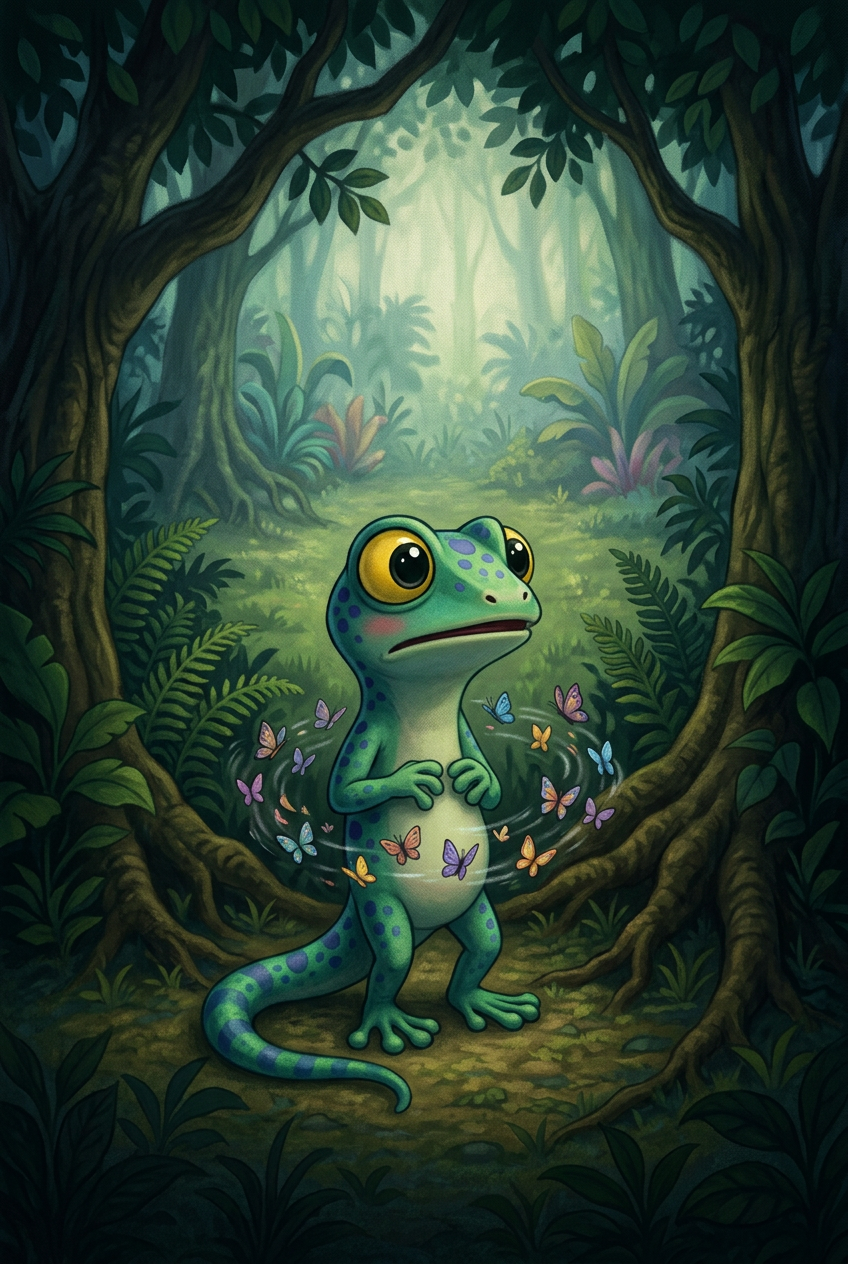
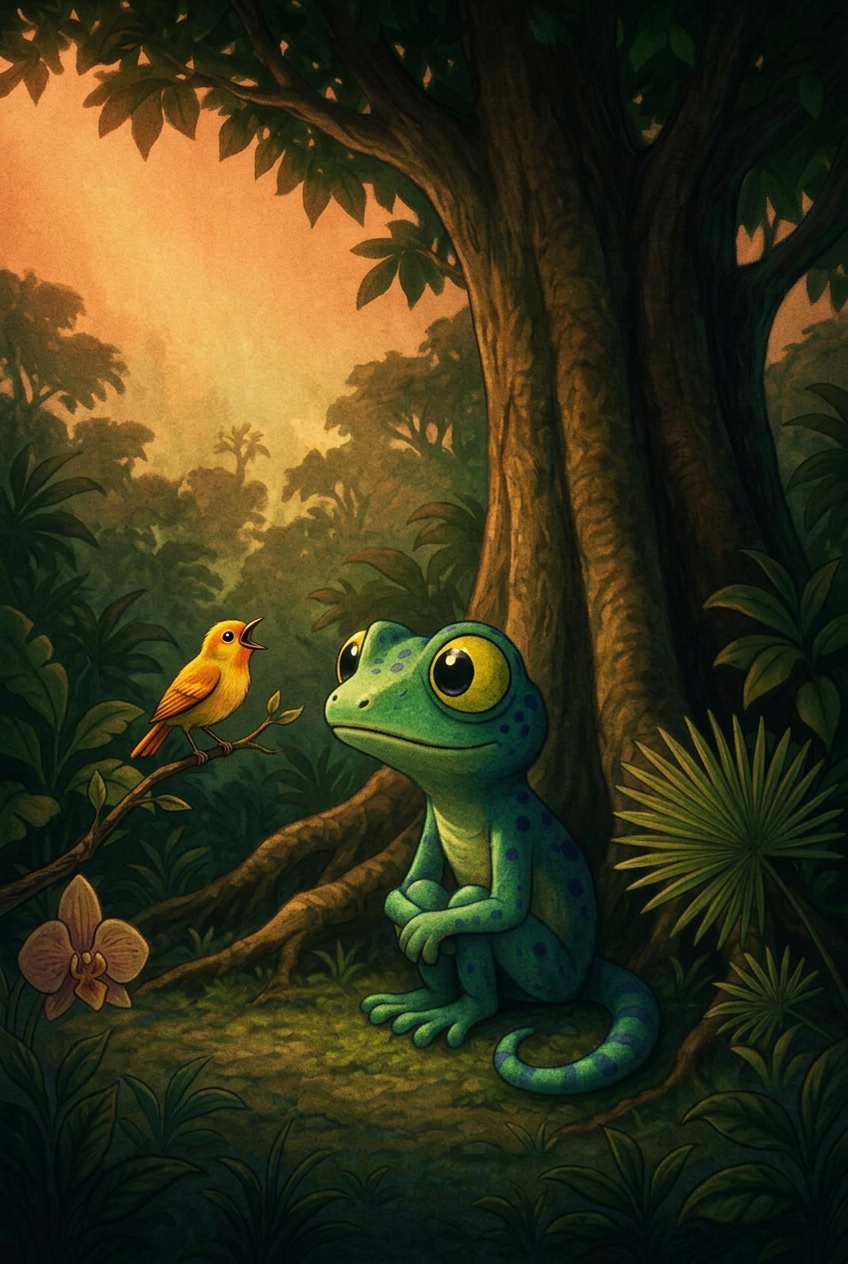
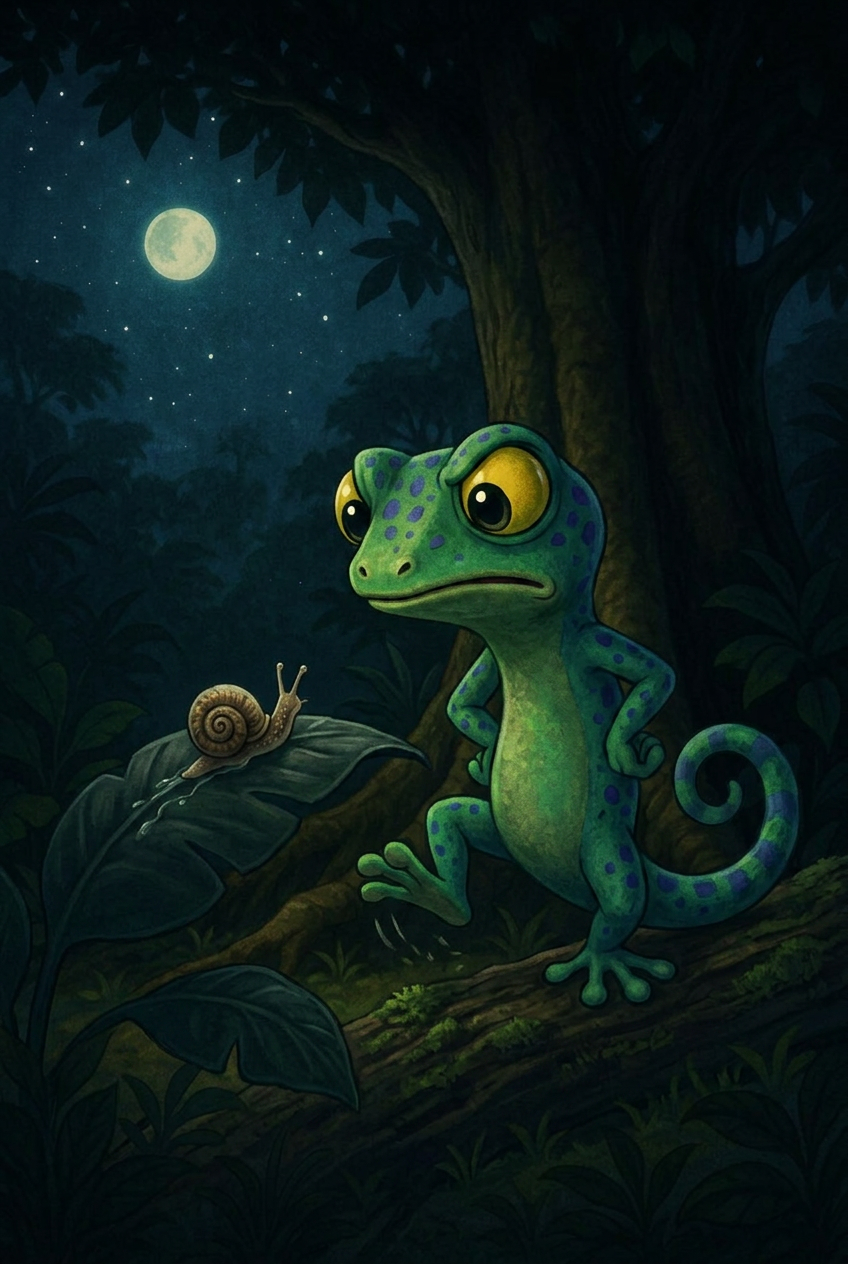
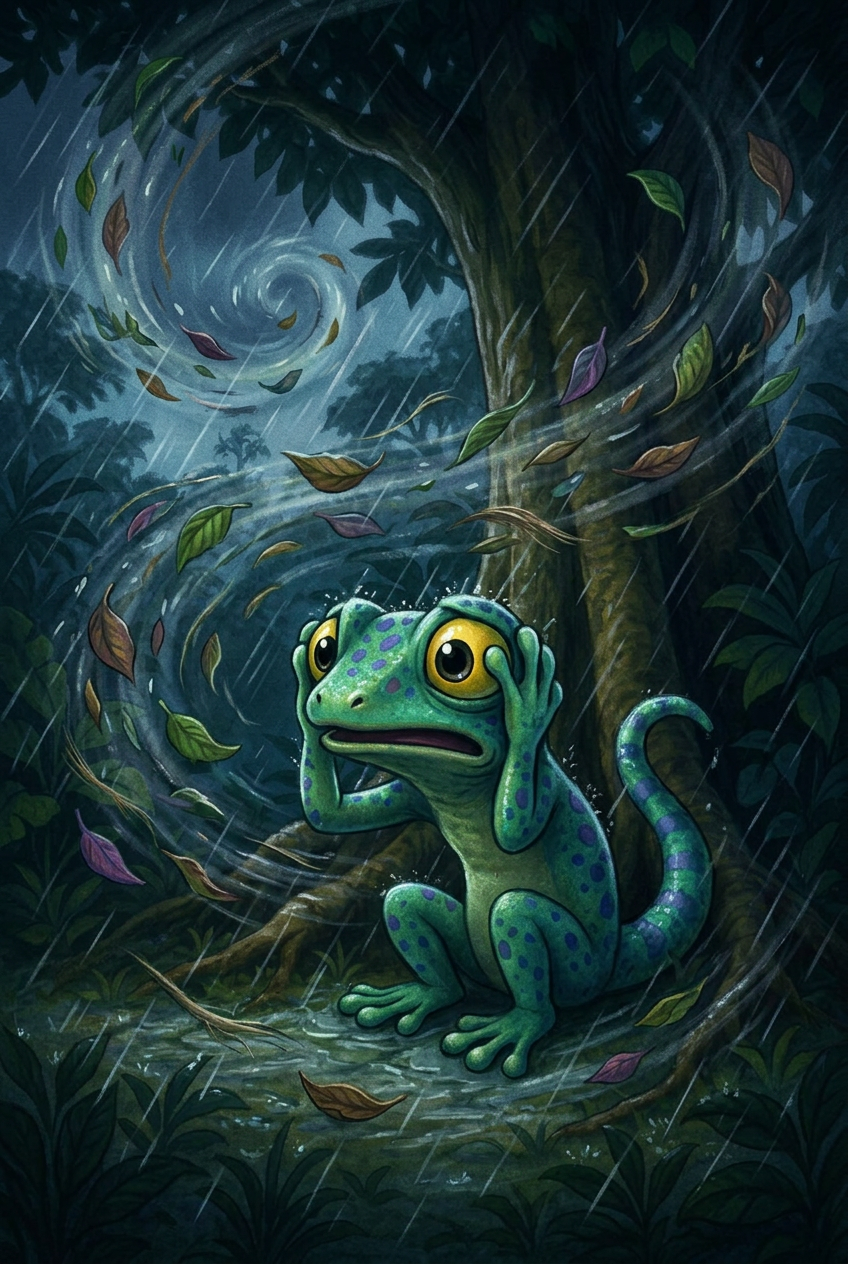
Every feeling also links to the chapter of Gede the Gecko that lives in it, so a hard day can turn into a story you read together.
Reading age
Reading along · Two pages side by side with the words lighting up as the voice reads, so the eyes follow the sound.
Search in
SEL focus
Showing 16 of 16 feelings
Feeling
It sounds like
One small thing to try
Read together
SmallSelf-awareness
It sounds like“I’m not enough.”
One small thing to tryName one thing your body did well today.
One painted card for every feeling, from the world of the book. Let a child pick the picture that matches today, then read what sits underneath it. Every card is also a printable A4 page with the IFS explanation and the next step for the child, a parent and an educator.
Written through the lens of Internal Family Systems: a feeling is rarely the whole story. There is usually a part of the child doing a job — protecting, hiding, hurrying, shrinking — and something tender underneath that it is guarding. You do not need to be a therapist to use this. You need to stop treating the behaviour as the problem and start being curious about the part doing it.
Small
Self-awareness
“I’m not enough.”
What’s underneathA young part that once got compared to someone bigger and decided it was safer to shrink. It is not low confidence — it is a part protecting the child from being measured and found wanting.
The child can
Stand up, put both feet flat, and feel how much floor is under you. Say your own name out loud once.
A parent can
Resist “but you’re great at…”. Praise contradicts the part and it digs in. Try: “Something in you feels small right now. I’d like to hear about it.”
An educator can
Give this child a task with a visible outcome and no audience — handing out materials, watering a plant. Competence lands before compliments do.
What’s underneathA part that has given up asking. Being overlooked hurt, so it made invisibility the plan — you cannot be rejected if you were never in the room.
The child can
Choose one person and say one true sentence to them. It doesn’t have to be big. “I got picked last today” counts.
A parent can
Notice something specific and unrelated to achievement: “You took your shoes off quietly so the baby stayed asleep.” Being seen for who they are, not what they did.
An educator can
Use their name in the first five minutes of the lesson, in a neutral sentence. Quiet children can go whole days unnamed.
What’s underneathAn exile — the tender part that holds “I am on the outside”. Protectors often cover it with boredom, clinginess or “I don’t care about them anyway”.
The child can
Draw the person you’d like to sit next to. Drawing them makes tomorrow feel possible.
A parent can
Sit beside them without talking for two minutes. Company is the medicine; conversation is optional.
An educator can
Engineer proximity, not friendship — a shared job with one other child. Forced play dates fail; shared tasks work.
What’s underneathA manager part holding a secret to prevent shame. It is loyal, not deceitful — it believes the relationship survives only if nobody knows.
The child can
Say it to a toy, or into a cushion, first. The second time is always easier than the first.
A parent can
Thank the hiding before you ask for the truth: “Part of you was scared to tell me. That makes sense.” Then leave a silence.
An educator can
Offer a non-verbal channel — a note in a box, a slip on the desk. Never require public disclosure.
What’s underneathA protector that learned speaking up costs something. The silence is a door being held shut from the inside, not an absence of thought.
The child can
Say the sentence once to the mirror. Your voice practising is still your voice.
A parent can
Never answer for them, and never fill the pause. Count ten seconds silently; most children speak by seven.
An educator can
Let them write the answer, or say it to one peer first. Whole-class speaking is the last step, not the first.
What’s underneathThis is Self, not a part — the settled, curious, connected state everything else is trying to protect. Worth naming so children can find their way back to it.
The child can
Do the silliest movement you can for ten seconds. Notice what your face does.
A parent can
Join it for sixty seconds rather than watching it. Shared play builds more safety than any conversation about feelings.
An educator can
Protect unstructured time. Play is where the regulation practised in a lesson actually gets used.
What’s underneathA part guarding the known. Change costs energy the nervous system may not currently have — the resistance is a budget, not a preference.
The child can
Name one thing that stays the same no matter what: your name, your bed, the person who picks you up.
A parent can
Keep three small things identical through any big change — same cup, same bedtime song, same seat. Anchors do the work.
An educator can
Pre-teach transitions. “In five minutes we stop” is not a courtesy; it is the intervention.
What’s underneathThe system has gone past capacity and a firefighter takes over — shutdown, tears or an explosion. Nothing said in this state is being stored.
The child can
Both hands flat on your chest. Feel the weight of them and let your shoulders drop.
A parent can
Stop teaching. Lower your voice, reduce the input, wait. Debrief tomorrow, never during.
An educator can
Have a named, permission-free exit — a calm corner they can use without asking. Asking is impossible in that state.
What’s underneathAn exile finally allowed through. Sadness that is witnessed completes; sadness that is interrupted goes back underground and returns as behaviour.
The child can
Let the tears come. They stop by themselves, like rain does.
A parent can
Stay, be quiet, and don’t cheer them up. “I’m here, take your time” is the whole intervention.
An educator can
Allow tears without an audience and without sending them away alone. Presence, not the corridor.
What’s underneathParts have stepped back and Self is leading — curious, calm, connected. This is the state to name and map so a child can find the road back to it.
The child can
Find where “safe” lives in your body. Put your hand there and remember the spot.
A parent can
Name it out loud when it happens: “This — right now — this is what calm feels like in you.”
An educator can
Anchor the class in it at the end of a session, so the felt sense of safety is what they carry out of the room.
Read the sentence in “it sounds like” out loud together.
Do the small thing side by side — not instead of them.
Read the matching chapter at bedtime, or listen to it read aloud.
How it maps to social emotional learning
Every feeling is tagged with one of the five widely used SEL competencies — self-awareness, self-management, social awareness, relationship skills and responsible decision-making — so teachers and counsellors can slot the chart into an existing lesson or check-in routine. It is free to print and use in classrooms.
Gede the Gecko is a read-along book: every page can be read on screen or listened to, narrated slowly and warmly. The intro and first chapter are free.